
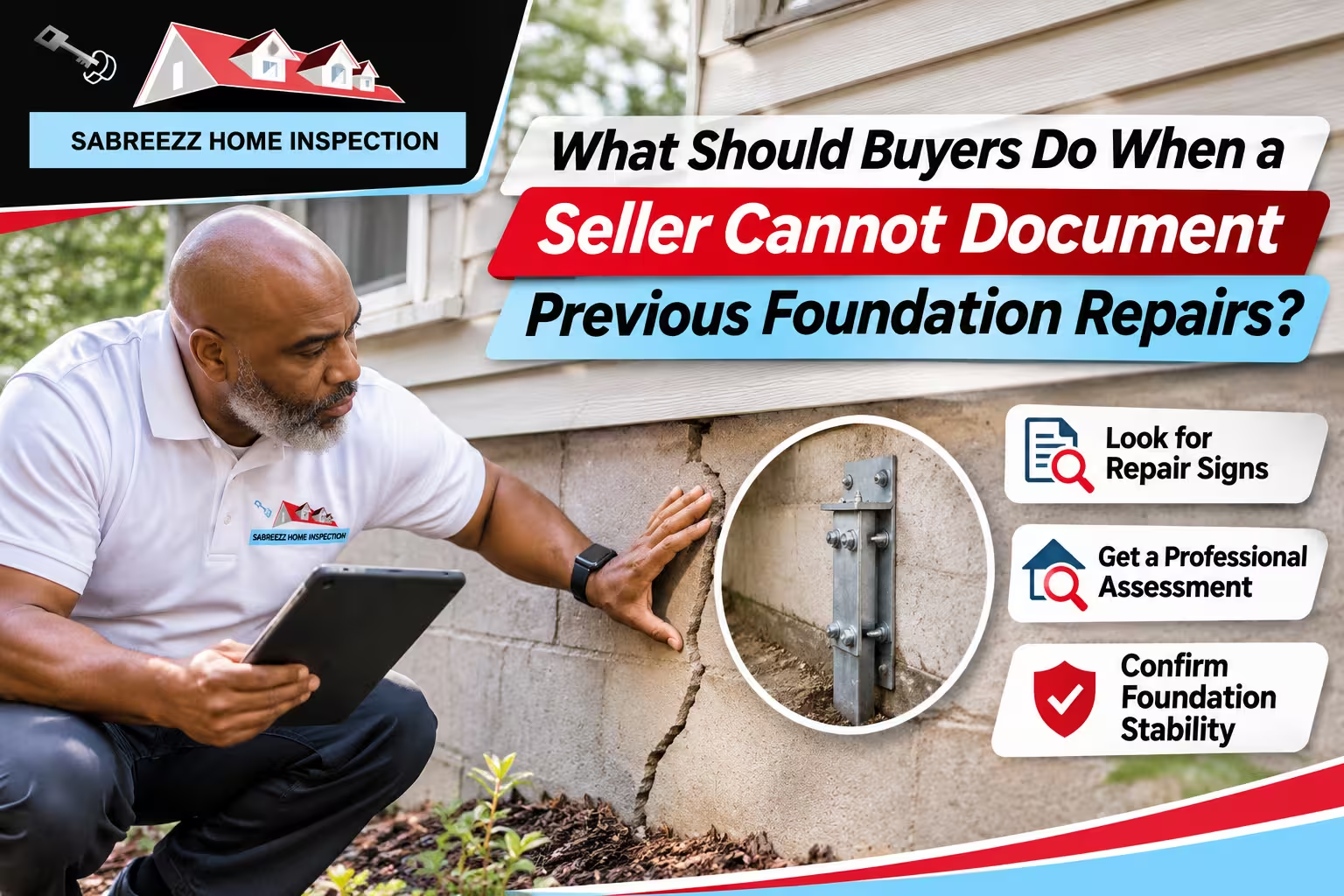
A seller points out steel braces along a basement wall but cannot provide the contractor’s invoice, an engineer’s report, or the date they were installed. The house may look well maintained, yet the buyer has little evidence of what problem the work addressed. Missing paperwork does not automatically mean the repair was defective, but it changes what needs to be checked before closing.
Undocumented foundation repairs deserve a clear paper trail and an independent assessment, not an immediate assumption of fraud or structural failure. Ask what work was done, search for permits where applicable, and separate the general home inspection from a structural engineer’s evaluation. Most importantly, resolve important questions within the purchase agreement’s inspection and negotiation deadlines rather than accepting an unsupported assurance that everything is fine.
Why Does Missing Foundation Repair Documentation Matter?
A visible brace or patch tells you that someone worked on the foundation, but not why they did it. The original concern may have involved wall movement, water entry, a crack, or another condition. Without earlier photographs and repair records, a buyer cannot easily tell which parts were affected, whether the recommended scope was completed, or whether the work later needed adjustment. A repair may also predate the current owner, making missing records especially understandable.
Which Foundation Repair Records Should You Request?
Start with the original contractor’s name, approximate repair date, photographs, and any written assessment describing the problem. Request proposals, signed contracts, invoices, change orders, and proof of completion if available. If an engineer developed the repair plan, ask for the drawings and final correspondence. An estimate alone does not establish that repairs were completed.
Next, ask for permit numbers and inspection signoffs where required, along with written warranty terms and records of any follow-up visits. Compare the documents with the features visible in the basement, such as braces, anchors, patched masonry, or drainage equipment. Note discrepancies. If the seller has no records, ask for a written account of what they know, what they learned from previous owners, and what remains uncertain.
What Does Michigan’s Seller Disclosure Form Actually Require?
The Michigan Seller Disclosure Act applies to many residential transfers, subject to statutory exceptions. Its prescribed form asks about known settling, flooding, drainage, structural, or grading problems. It also asks whether the seller knows of structural modifications, alterations, or repairs made without necessary permits or licensed contractors. These questions may be relevant to earlier foundation work.
The form is based on the seller’s knowledge and explicitly says it is not a warranty or a substitute for inspections. Michigan law also permits a seller to state that required information is unknown when that is accurate. Crucially, the form does not itself provide an itemized history of every foundation repair. If a response conflicts with visible work or earlier statements, ask for clarification in writing and consult a Michigan real estate attorney about disclosure obligations.
Can You Find Past Foundation Permits in Detroit?
For a Detroit property, the Buildings, Safety Engineering and Environmental Department maintains an electronic permitting system known as Accela or eLAPS. Buyers can search permit records using an address or other property information and may find a related residential building permit. Ask the seller for any permit numbers because a record is easier to match when the contractor and approximate work date are known. A permit search is only a starting point.
A missing online record does not conclusively prove that no permit existed or that the work was illegal. Older records, address variations, the scope of the original repair, and limitations in searchable data may affect results. Ask the city which permits and final inspections would have been required for the specific work at the time it occurred. Properties outside Detroit require checking with their own permitting authority rather than the city’s portal.
What Can a Standard Home Inspection Verify?
A visual home inspection can document accessible foundation conditions and identify signs that suggest movement, moisture penetration, or repair concerns. An inspector may observe bracing, patched walls, changes in alignment, and related conditions in floors or doorways. InterNACHI’s standards specifically address visible foundation movement indicators while explaining that inspectors are not required to determine structural-system adequacy. These observations help buyers assess next steps.
The inspection cannot reveal every concealed anchor, buried footing, or repair detail hidden behind finished walls. It also cannot establish that an old stabilization system was correctly designed or installed. If a report notes a previous repair without records, ask the inspector to describe exactly what was visible and what was inaccessible. Visual findings are not engineering approval.
Which Findings Make an Independent Structural Assessment Important?
A licensed structural engineer is worth consulting when the original repair’s purpose is unclear, visible components appear damaged, or the wall shows signs of possible movement. Cracks that have reopened through patches, unusual deflection, displaced masonry, or new gaps at structural connections deserve attention. These signs do not establish that a particular repair failed, but they give a specialist concrete questions to investigate instead of relying on the seller’s recollection.
Ask the engineer for a written scope identifying what was evaluated and any limitations created by concealed construction. Depending on findings, the engineer may recommend obtaining older drawings, measuring movement, opening a limited area, or reviewing the current repair design. A statement that the visible wall looks stable today is different from verification that the original work met a specified engineering plan. Ask which conclusions the report supports.
Does a Foundation Warranty Still Protect the Buyer?
A warranty can be useful evidence of who performed the work, but its name alone says little about future protection. Review which components it covers, exclusions, maintenance requirements, and whether it transfers to a new owner. Some agreements require notice, a fee, or registration within a defined period. Contact the issuing company directly to confirm that the policy remains valid and transferable; an expired or nontransferable warranty should not be treated as a repair guarantee.
How Should Buyers Handle the Inspection Contingency?
Review the purchase agreement immediately to identify inspection, objection, and response deadlines. Ask your agent or attorney whether additional time can be requested for permit searches or an engineer’s visit. An inspection contingency may offer options to negotiate, request repairs, or terminate under specified conditions, but those rights depend on the signed contract. Do not assume that waiting for missing documents automatically extends your inspection period.
The Detroit home inspection guide explains the wider inspection process before closing. For this specific foundation concern, make a short issue list: records still missing, permit status, engineer’s conclusions, recommended work, and estimated costs. Share the written information with the appropriate parties before making requests, rather than negotiating from an unverified verbal description of the previous repair.
What if the Seller Offers to Repair the Foundation Again?
Before agreeing to more work, require a clear diagnosis and written scope from the appropriate specialist. Replacing a visible brace or patching a crack may be unnecessary if the original system is sound, or insufficient if movement continues beneath the surface. Have the proposal identify who designs the work, whether permits are needed, and what completion records the buyer will receive. Cosmetic patching is not equivalent to addressing a structural concern.
After the agreed work, a re-inspection can document accessible changes compared with earlier home inspection findings. Sabreezz Home Inspection describes this as a review of previously identified items and visible repairs. It is not the same as a structural engineer’s completion verification, permit signoff, or certification of concealed reinforcement. When the repair was engineered, request any applicable engineer follow-up and municipal inspection records separately.
How Do You Decide Whether the Remaining Uncertainty Is Acceptable?
Once the records search and specialist assessments are complete, separate confirmed facts from unresolved risks. A documented, stable repair with understandable limitations presents a different decision from a hidden system whose purpose and condition cannot be established. Consider the engineer’s recommendations, contractor proposals, possible future monitoring, and any lender or insurer requirements. There is no universal rule that buyers must reject a property because one old invoice is missing.
Frequently Asked Questions
Can a Seller Say They Do Not Know Who Repaired the Foundation?
Yes, the current owner may genuinely lack details about work completed by an earlier owner. Michigan’s disclosure law allows unknown information to be identified as such when appropriate. That answer does not tell the buyer whether the repair was adequate. Ask for whatever records exist, check applicable permit sources, and obtain an independent inspection. If you suspect a knowingly inaccurate disclosure, consult a Michigan real estate attorney rather than treating missing paperwork alone as proof.
Does a Building Permit Prove the Foundation Repair Was Done Correctly?
Not by itself. A permit can establish that a project was recorded, but the permit application, approved scope, inspection history, and any final approval may tell different parts of the story. It does not automatically verify concealed work beyond what was reviewed. Match the record to the visible repair and request an engineering assessment when structural adequacy remains uncertain. Likewise, the absence of a searchable permit does not, on its own, establish a violation.
Should You Pay for a Structural Engineer Before Closing?
An independent engineer is often a sensible next step when foundation repair records are missing and the visible work or prior damage raises structural questions. The engineer can assess current conditions, explain limitations, and recommend investigation or correction where needed. Arrange the evaluation early enough for your contract deadlines. A general home inspection cannot provide the same engineering conclusions, and an estimate from a company selling repairs may answer a different question.
Can a Home Re-Inspection Replace an Engineer’s Foundation Report?
No. A general re-inspection may confirm that certain accessible items were visibly changed after the initial report. It normally does not calculate foundation loads, verify hidden reinforcement, or certify that a structural repair meets an engineered design. If the repair required engineering, ask for the responsible engineer’s completion documentation and relevant municipal records. Use the home re-inspection for its intended visual follow-up role rather than treating it as interchangeable with specialist verification.
Make the Foundation Repair History Part of Your Decision
Missing paperwork should lead to careful questions, not instant panic or automatic approval. Gather available records, review Michigan’s disclosure information, check Detroit permits where relevant, and arrange a qualified structural evaluation when the repair cannot be verified visually. Sabreezz Home Inspection can document accessible property conditions during a homebuying inspection in Detroit, MI. To discuss an inspection or follow-up visit, contact Sabreezz Home Inspection or call (313) 247-3900 before your transaction deadline.