
Radon gas is invisible, odorless, and found in homes across Michigan, which is why testing is the only way to know whether it’s in yours. The EPA’s action level is 4 picocuries per liter (pCi/L), and it recommends fixing a home at or above that level and considering a fix between 2 and 4. If you’re looking into radon testing in Detroit, MI, whether you’re buying a home or already own one, the process is simpler than most people expect, and the results are easy to act on.
This guide covers what radon is and why it matters locally, when to test, how short-term and long-term tests work, how to read your results, what mitigation involves, what testing and fixing generally cost, and how to choose someone to do the work.
What Radon Is and Why Detroit Homes Should Be Tested
Radon is a naturally occurring radioactive gas that comes from the breakdown of uranium in soil and rock. It seeps up from the ground and enters homes through the foundation: cracks in floors and walls, gaps around pipes, floor drains, sump pits, and crawl spaces. Because it can accumulate indoors, the EPA identifies it as a leading cause of lung cancer, and the leading cause among people who have never smoked. There’s no level of exposure considered completely safe, which is why the aim is to keep levels as low as practical.
The local numbers explain the attention. Michigan’s environmental agency reports elevated radon in all 83 of the state’s counties, and roughly one in four Michigan homes tests above the action level. In Wayne County, state data show about one in six tested homes coming back at or above it. That’s lower than some neighboring counties, but it’s still a meaningful share, and radon levels can differ sharply between neighboring houses, so a neighbor’s result tells you little about yours.
EPA’s radon map shouldn’t be used to decide whether to test either. Homes with elevated levels have turned up in every zone, and the agency recommends testing all homes. Detroit’s older housing, with its basements and aging foundations, makes that advice easy to follow.
When to Test: Buying a Home vs. Already Living in One
If you’re buying. The EPA recommends testing at the point of sale in any home, regardless of zone. In a real estate transaction, radon testing is typically a separate service from the general inspection and has to be requested, so it’s worth planning for within your inspection window. If the result is 4 pCi/L or higher, the EPA recommends negotiating with the seller to have a mitigation system installed to bring the level below 4. Our home inspection guide for Detroit buyers explains how that window and the negotiation fit into the rest of the process.
If you already own. If you’ve never tested, test now. It’s also worth testing again after major changes, like finishing a basement or altering the foundation or heating system, since those can change how air moves through the house. A home that tested low once isn’t guaranteed to stay that way.
How a Radon Test Works
Short-term tests
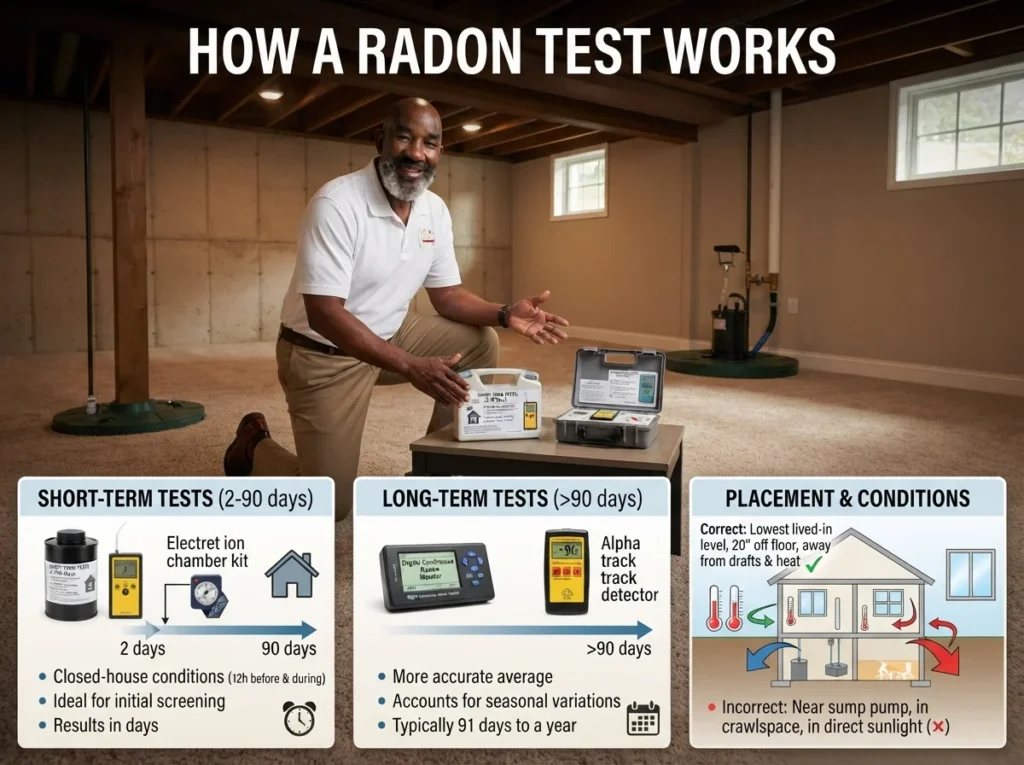
A short-term test runs anywhere from two to ninety days, and most are done over a few days. It’s the standard choice for a home purchase because it gives results quickly. Real estate testing generally means either two short-term devices placed side by side for at least 48 hours, or a continuous monitor running for at least 48 hours. If two tests are used, the average of the results guides the decision.
Long-term tests
A long-term test runs for more than 90 days and shows how levels vary over time and across seasons. It’s well suited to homeowners who aren’t on a deadline, and it can be a good way to confirm an unclear short-term result.
Placement and conditions
Where and how the test is done matters as much as which device is used. Short-term testing requires closed-house conditions: windows and exterior doors kept shut except for normal entry and exit, and no fans or equipment that bring in outside air. Those conditions should begin at least 12 hours before the test starts and continue until it ends. That’s why many people test in the cooler months, when the house is naturally closed up. Michigan’s winters make that easy, and it’s a good time for a follow-up test if an earlier test was done in summer.
The device belongs in the lowest lived-in level of the home, which in many Detroit houses means the basement, as long as it’s livable space. For real estate testing, the lowest livable area is the standard. Place the device away from drafts, exterior walls, and high humidity, and don’t move or interfere with it during the test, since that can invalidate the results.
You can buy do-it-yourself kits, and some county health departments have offered free or discounted ones during Radon Action Month. For a purchase, though, many buyers prefer a professional radon inspection, where the equipment, placement, and closed-house conditions are managed by someone who does it routinely, and the results can be relied on by everyone involved in the transaction.
Understanding Your Results
Results are reported in pCi/L. As a general guide:
| Result | What it means | Typical next step |
| Below 2 pCi/L | Low | No action needed, though retesting after major changes is wise |
| 2 to 4 pCi/L | Below the action level, but not zero risk | EPA suggests considering a fix |
| 4 pCi/L or higher | At or above the action level | EPA recommends fixing the home |
A single high short-term result is usually confirmed with a follow-up test, since radon levels fluctuate. For a purchase, a result at or above the action level is typically the trigger for asking the seller to arrange mitigation.
What Happens If Radon Is High
A high result is common and fixable. A radon mitigation system works by drawing radon from beneath the foundation and venting it outdoors, and EPA notes that some systems can reduce levels by up to 99 percent. A few points are worth knowing before you hire anyone:
- Sealing cracks alone seldom brings levels down enough. It’s generally used with other methods.
- The system fan may last five years or more, so plan for occasional maintenance, and check any warning device it includes.
- After installation, test again to confirm the system is working.
- The EPA recommends hiring a contractor certified by a national program, such as the National Radon Proficiency Program (NRPP) or the National Radon Safety Board (NRSB).
That last point matters in Michigan, because according to state radon program materials, Michigan doesn’t regulate radon testing or mitigation companies. Credentials are something you check yourself.
What Radon Testing and Mitigation Cost
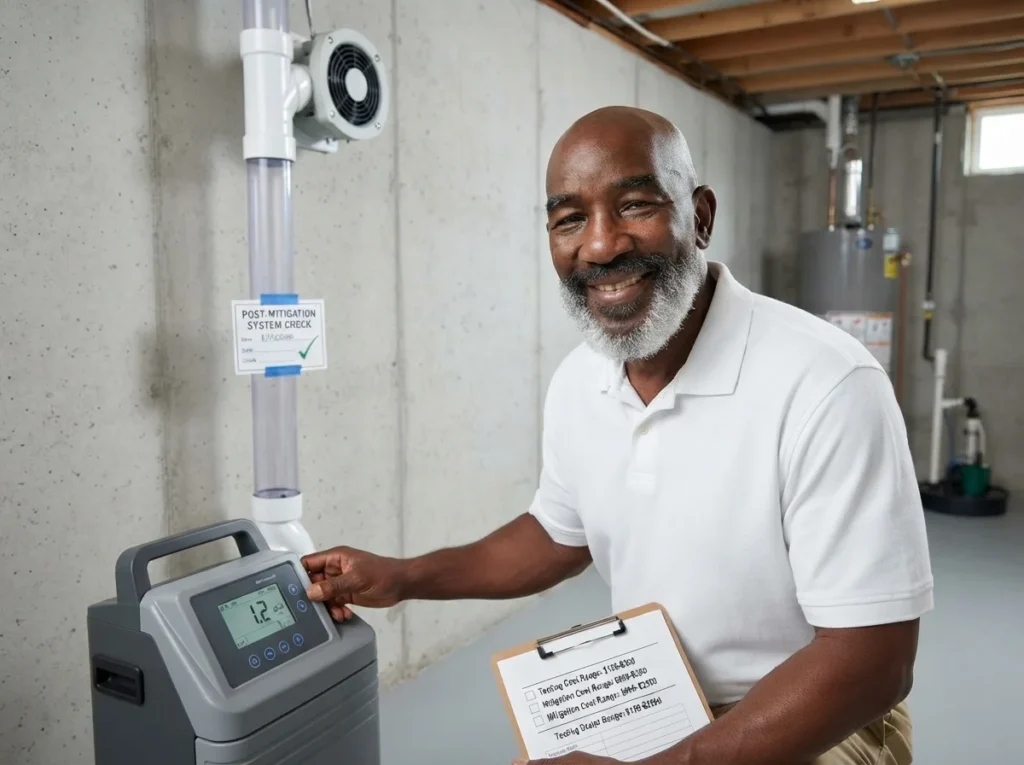
A professional radon test is usually priced as an add-on to a home inspection or as its own service, and general estimates fall around $100 to $300, sometimes more depending on the method and the home. Mitigation costs more and varies with the home’s design: general estimates often run from about $1,200 to $2,500, and higher for some homes, such as those with crawl spaces.
Please note: These prices are estimates only and are not confirmed. Final cost depends on the home’s size and layout, foundation type, test method, the system required, labor, and other factors. A written quote before you book is the only reliable number. For mitigation, EPA suggests getting estimates from more than one certified contractor.
Choosing a Radon Tester in Detroit
Since the state doesn’t license testers, a few questions help you judge quality:
- Are they certified through a national program, and can they show it?
- What device and protocol will they use, and how long will the test run?
- How do they manage closed-house conditions and placement?
- How quickly will you get the results, and what happens if a retest is needed?
- Can the test be combined with a home inspection?
Sabreezz Home Inspection offers radon inspection as one of its services, and as with any provider, it’s reasonable to ask about certification and testing method before you book.
Frequently Asked Questions
Does radon only matter in basements?
No. Radon can be present on any level, but it’s typically highest closest to the ground, which is why tests go in the lowest livable area.
Can I test in the summer?
You can, but cooler months are easier for keeping closed-house conditions, and a follow-up test in the heating season is recommended if you tested in summer.
Is a DIY kit good enough?
For homeowners who aren’t under a deadline, a properly used kit can be a reasonable first step. For a purchase, a professional test reduces the risk of errors or disputes.
Can radon testing be combined with a home inspection?
Yes. Many buyers add it to a home inspection so both are done within the same inspection window.
Ready to Test Your Home?
If you’re buying in the Detroit area, the sooner you schedule, the more time you’ll have to review results within your inspection period. You can book your radon test alongside your inspection.