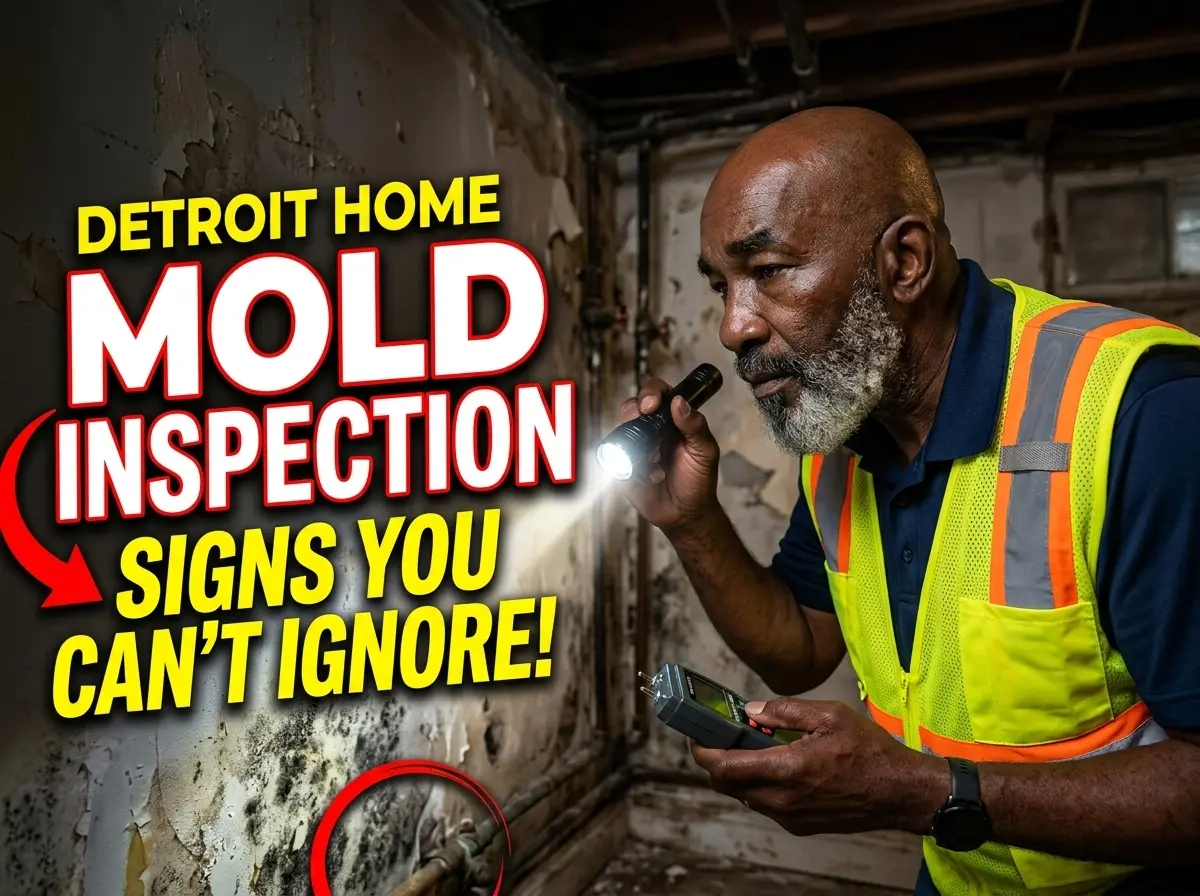
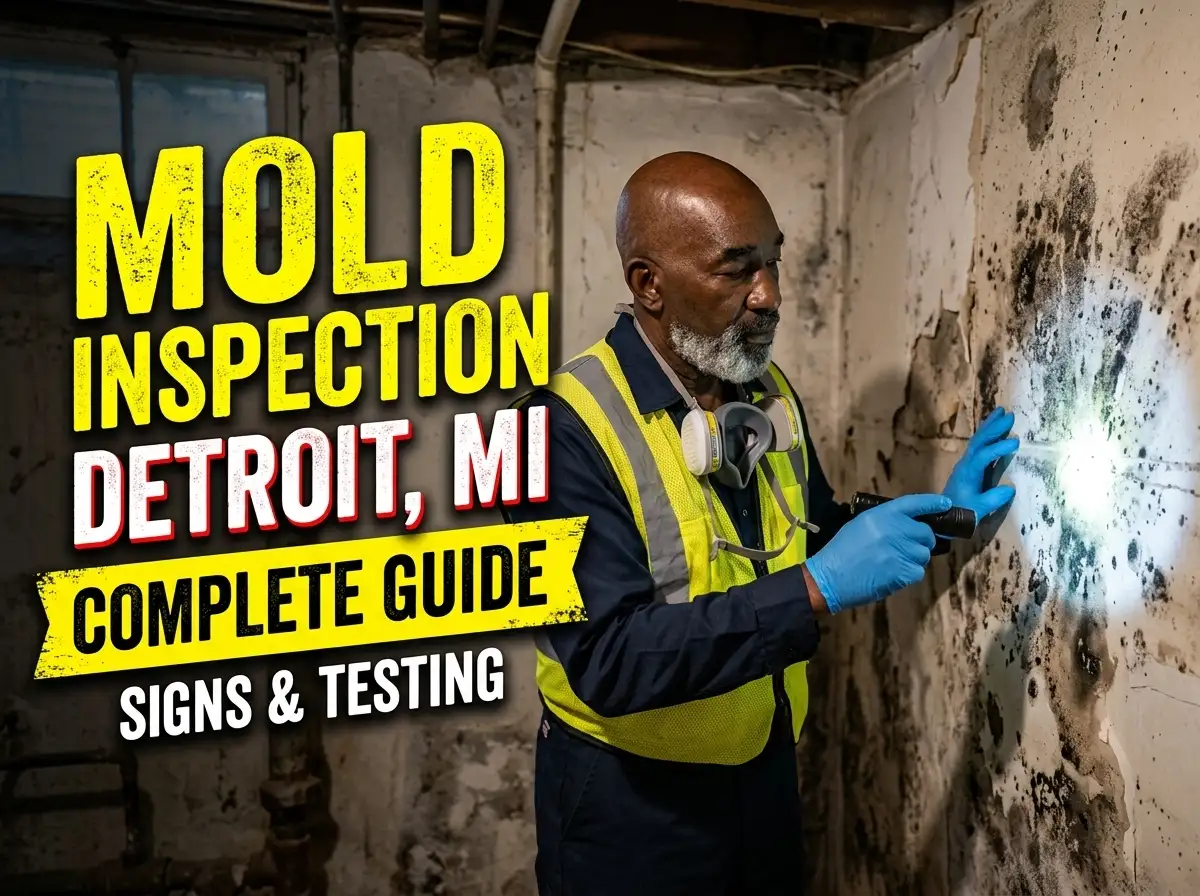
A mold inspection in Detroit, MI is a close look at a home for visible mold, moisture, and the conditions that let mold grow. Its most useful job isn’t naming a type of mold, it’s finding the water that feeds it. Testing, such as air or surface sampling, can be part of the picture, but it’s used in particular situations, not automatically. In a city with older homes, damp basements, and a recent history of serious flooding, knowing where moisture is hiding matters more than most buyers and owners expect.
This guide covers why mold is such a common concern locally, the signs to watch for, what an inspection involves, when testing makes sense, what to do if you find mold, and how to choose an inspector.
Why Mold Is a Detroit Home Problem
Mold needs moisture, and where moisture is controlled, mold doesn’t take hold. Spores are present almost everywhere, but they only grow where materials stay damp. The EPA notes that drying water-damaged areas within 24 to 48 hours usually prevents growth, and that indoor humidity should stay below 60 percent, ideally between 30 and 50 percent.
Detroit adds several reasons moisture gets a foothold. Around nine in ten homes in the city were built before 1980, so many have aging foundations, older plumbing, and basements that have seen decades of wear. The city also relies on a combined sewer system, where stormwater and wastewater share the same pipes, and heavy rain can push water back into basements. After the June 2021 storm, which dropped more than six inches of rain in about twelve hours, thousands of households reported basement water and sewage backups. A University of Michigan–led study of Detroit homes found mold in the basements of 84 percent of the sampled homes that had flooded before.
Add humid summers, winter condensation, and the occasional failed sump pump, and it’s clear why a mold inspection can be worth doing, particularly before you buy. For people with allergies or asthma, indoor mold can aggravate symptoms, which is one more reason to take damp conditions seriously.
Signs of Mold: Visible and Hidden
Some mold announces itself. Other mold hides behind walls and under floors. The signs worth taking seriously include:
- Visible mold. Spotting or fuzzy growth in shades of black, green, white, or gray, often on walls, ceilings, or around windows
- A musty odor. Persistent, earthy smells, even when nothing is visible, often point to hidden moisture
- Water stains and discoloration on ceilings, walls, or floors
- Peeling or bubbling paint, warped wood, or wallpaper that’s lifting
- Condensation on windows or pipes, which can mean high indoor humidity
- Recurring dampness after rain, which suggests water intrusion
Where hidden mold hides
Moisture and mold favor places you don’t see often: wall cavities behind leaking plumbing, the underside of a roof deck in the attic, crawl spaces with poor ventilation, and spaces behind finished basement walls. The HVAC system can be a source too, since condensation around coils, drip pans, and ducts creates damp spots. Bathrooms and kitchens, especially under sinks and around tubs, are frequent trouble areas. Our guide to common problems found during Detroit home inspections covers the basement and water issues that most often lead to mold.
What Happens During a Mold Inspection
Methods vary by inspector, but a thorough mold assessment typically follows a sequence like this:
- History. The inspector asks about leaks, past flooding, repairs, and any odors or symptoms.
- Visual inspection. Moisture-prone areas, such as the basement, attic, bathrooms, and around windows and the HVAC system, are examined for visible growth, staining, and water damage.
- Moisture readings. A moisture meter measures dampness in walls, floors, and other materials, and some inspectors also use thermal imaging to spot temperature differences that can signal moisture behind surfaces.
- Finding the moisture source. The goal is to trace why an area is wet: a leak, poor drainage, condensation, or a failed sump pump.
- Sampling, when appropriate. If it’s warranted, the inspector may collect air or surface samples (see below).
- A written report. The inspection report documents what was found, where, and what to do next.
A professional mold inspection is built around that last point: identifying the moisture problem, because removing mold without fixing the source usually means it comes back.
Mold Testing: Air Sampling, Surface Sampling, and When It Makes Sense

Testing is the part people ask about first, and the EPA’s guidance is more cautious than many expect. In most cases, if mold is visible, sampling isn’t needed, since you already know it’s there and the next step is the same either way: fix the moisture and clean it up. The EPA also notes that no federal limits exist for mold or spores, so sampling can’t show whether a building meets a “standard,” and that it should be done by professionals experienced in designing sampling plans and interpreting results.
When sampling is used, it generally takes one of two forms:
- Air sampling collects a measured volume of air and counts spores, often comparing indoor samples with an outdoor sample for context.
- Surface sampling uses tape lifts or swabs to check whether a suspicious stain or growth is mold.
Testing is most useful when you suspect hidden mold but can’t see it, when documentation is needed, or when a specific concern calls for it. Keep in mind that results are a snapshot, since spore counts change with time, weather, and activity. Do-it-yourself kits are inexpensive but are easy to misread, so results are best treated as one piece of information next to a professional visual and moisture assessment.
Mold and Your Home Purchase
For buyers, the key is to look for moisture signs early. A general home inspection notes visible staining, damp areas, and conditions that favor mold, but a dedicated mold assessment goes further when something looks off: a musty basement, water stains, signs of past flooding, or a seller who can’t explain repairs. If you’re under contract, your inspection period is the time to raise it, since findings can be part of a negotiation. Our home inspection services are one way to cover the general review first and decide whether a mold assessment should follow.
What to Do If You Find Mold

Whatever the size of the problem, fixing the moisture comes first. A few EPA-aligned steps apply:
- Find and stop the water source. Cleaning without fixing the leak or humidity problem won’t last.
- Dry quickly. Wet materials should be dried within 24 to 48 hours.
- Decide how big the job is. The EPA says homeowners can generally clean mold covering less than about 10 square feet themselves. Larger areas, extensive water damage, mold in the HVAC system, or sewage-related flooding are better handled by a professional.
- Don’t just paint over it. Covering mold doesn’t remove it or the moisture feeding it.
Prevention helps too. Keep humidity in the 30 to 50 percent range, use a dehumidifier in the basement if needed, make sure gutters and downspouts carry water away from the foundation, run bathroom and kitchen exhaust fans, and test your sump pump, ideally with a battery backup, before the rainy season.
Choosing a Mold Inspector
Michigan doesn’t require a specific state license for mold inspection or remediation, according to licensing resources, so it’s up to you to ask the right questions:
- What methods will you use, and will you take moisture readings and look for the source?
- If sampling is recommended, why, and which lab analyzes the samples?
- Do you also sell remediation? Some homeowners prefer an inspector who doesn’t, to avoid a conflict of interest.
- What training and insurance do you have, and what will the report include?
Sabreezz Home Inspection lists mold inspection among its services, and these are fair questions to ask of any provider before you book.
Frequently Asked Questions
Do I need mold testing if I can see mold?
Usually not. The EPA says that when mold is visible, sampling is generally unnecessary. The priority is finding and fixing the moisture source.
Can mold be removed completely?
Not entirely, since spores are everywhere. The goal is to remove growth and control moisture so it can’t return.
Is a mold inspection part of a standard home inspection?
Typically not. A home inspection notes visible signs and moisture-prone conditions, while a mold assessment is a more focused service.
Ready to Check Your Home for Mold?
If you’re buying or living in a Detroit-area home with damp areas, a musty smell, or a history of water problems, an inspection can show where moisture is hiding. You can book your inspection and describe what you’ve noticed.