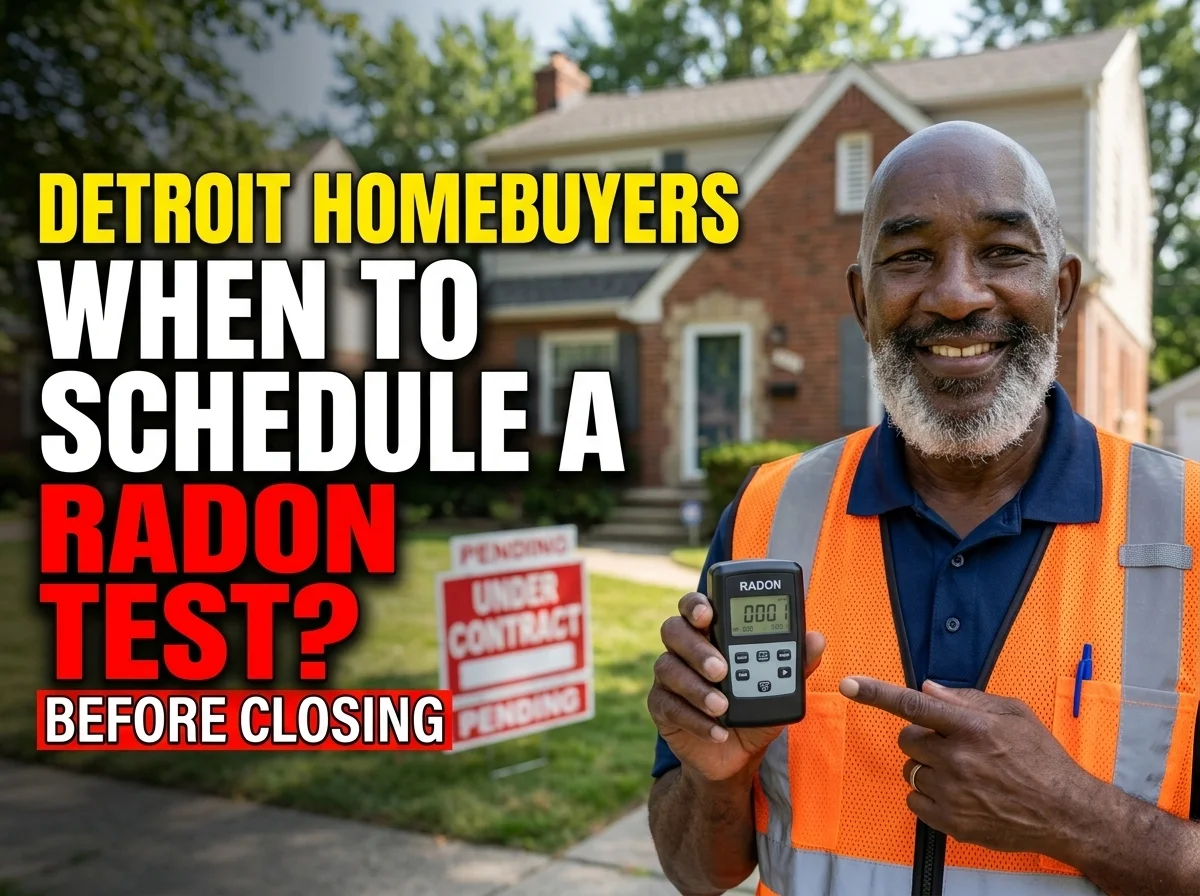
Radon testing cost in Detroit, MI depends mostly on whether you test yourself or hire a professional. A do-it-yourself kit is generally estimated at roughly $10 to $60. A professional test added to a home inspection often runs around $100 to $300, and a standalone professional test can run higher. Fixing a high result is a separate expense, and it’s the larger one.
This guide lays out the typical price of each testing option, what actually moves the number, how testing costs compare when you’re buying a home, and what to budget for if a test comes back high.
Radon Testing Cost at a Glance
Here are the general estimates for the common ways to test:
| Testing option | Typical estimate | Best for |
| DIY short-term kit (charcoal) | 10–60 | Homeowners screening their own home |
| DIY long-term kit (alpha track) | 25–60 | Homeowners tracking levels over months |
| Professional short-term test, added to a home inspection | 100–300 | Home purchases |
| Professional standalone test | 150–400+ | Sellers, or buyers who need a separate visit |
| Continuous radon monitor or long-term professional test | 150–500 | More detailed measurement and reporting |
Please note: These prices are estimates only and are not confirmed. Final cost depends on the test type and duration, property size and number of levels, foundation type, whether testing is an add-on or a standalone service, retesting, travel, and other factors. A quote before you book is the only reliable number.
DIY Kit or Professional Test? What You Get for the Price
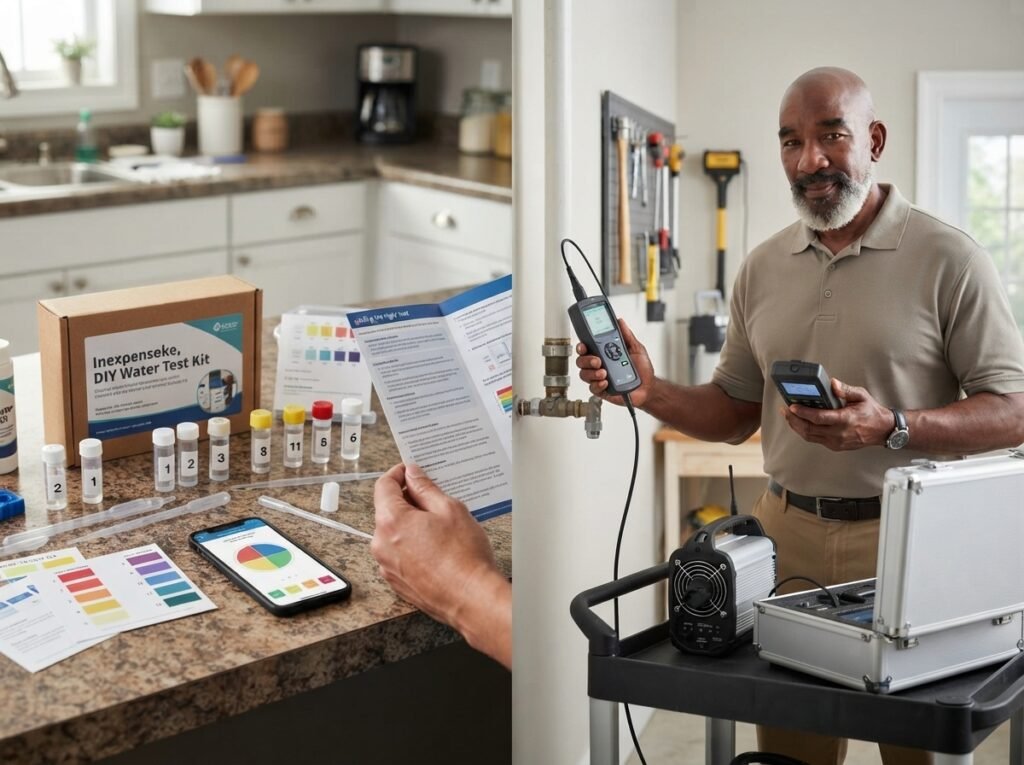
A kit is the cheapest way to find out whether radon is a concern. You place it, follow the instructions, and mail it to a lab. The trade-offs are practical. Some kits charge the lab fee separately, accuracy depends on following the instructions closely, and a mistake in placement or conditions can throw off the result. For a homeowner who isn’t on a deadline, a properly used kit is a reasonable first step.
A professional test costs more because you’re paying for more than the device. A tester brings calibrated equipment, often a continuous monitor, sets up the test under the right conditions, places the device in the correct location, and delivers a written radon report. In a home purchase, that matters. A neutral third party administering the test makes the result easier for both sides to trust, and it reduces the chance of a dispute over whether the test was done correctly.
If you’re buying, a professional radon inspection is generally the better fit, because the protocol is built for a real estate timeline and the result can be relied on during negotiation.
What Affects the Price
Several details explain why one quote differs from another:
- Testing equipment and type of test. Passive devices like charcoal canisters are cheaper. A continuous radon monitor, which logs readings throughout the test, costs more.
- Test duration. Real estate testing usually runs at least 48 hours. Long-term tests run more than 90 days and generally cost more.
- Property size and layout. A larger home or one with more than one lower level may need more than one device.
- Foundation and testing conditions. Basements, crawl spaces, and unusual layouts can change how the test is set up.
- Add-on or standalone. A test bundled with a home inspection is often priced lower than a separate visit.
- Retesting. A second test to confirm a high result, or a test after mitigation, adds to the total.
- Reporting and turnaround. A detailed written report or faster results can affect the price.
Location plays a smaller role. Prices in the Detroit area can vary by provider, and travel to farther parts of Metro Detroit sometimes adds a fee.
Radon Testing as an Add-On to a Home Inspection
For buyers, the practical way to test is as part of the inspection. Bundling means one visit, one schedule, and usually a lower combined price than booking a standalone test later. It also keeps the testing inside your inspection window, which matters because the contingency period in your purchase agreement is limited.
The testing process itself, including closed-house conditions and where the device goes, is covered in our radon testing guide for Detroit buyers and homeowners. The key point for budgeting is that a real estate test generally takes at least 48 hours, so it should be booked early to leave time for results.
What Happens After the Test: Retesting and Mitigation Costs

The EPA recommends fixing a home at or above 4 pCi/L and considering a fix between 2 and 4. If your first result is high, a follow-up test is common, since radon levels fluctuate, and the cost of that second test belongs in your budget.
If levels are confirmed high, mitigation is the larger expense. General estimates for a radon mitigation system often run from about $1,200 to $2,500, with higher figures for some homes, including those with crawl spaces. Some systems can reduce levels by up to 99 percent, and the work should be followed by a test to confirm results. The EPA recommends getting estimates from more than one certified contractor.
Mitigation prices are also estimates and vary by home and contractor.
In a purchase, a result at or above the action level is typically the point at which a buyer asks the seller to arrange mitigation, so the cost often becomes a negotiation item and not a surprise after closing.
How to Compare Radon Testing Quotes
Michigan doesn’t regulate radon testing companies at the state level, according to state radon program materials, so it pays to compare more than price. Ask each provider:
- What device and testing protocol will you use, and how long will the test run?
- How do you manage closed-house conditions and placement?
- Are you certified through a national program, and can you show it?
- What does the quote include: the report, a retest if needed, and the timeline for results?
- Is there a lower price if radon testing is bundled with a home inspection?
Sabreezz Home Inspection lists radon inspection among its services, and it’s reasonable to ask these same questions of any provider you’re considering.
Frequently Asked Questions
Is radon testing worth the cost?
Compared with the price of a home, the test is a small expense, and it’s the only way to know your level. Elevated radon turns up in every part of Michigan, and in Wayne County roughly one in six tested homes has come back at or above the action level.
Who pays for the radon test in a home purchase?
Usually the buyer, as part of their inspections, though it can be negotiated.
Are free or discounted test kits available?
Some county health departments have offered free or discounted kits, especially during January’s Radon Action Month. Availability varies, so check with your local health department.
Is radon testing part of a home inspection?
Not always. It’s often an add-on, so ask when you book a home inspection and confirm what’s included.
Ready to Add Radon Testing to Your Inspection?
If you’re buying in the Detroit area, scheduling radon testing with your inspection keeps everything within your contingency window. You can book your inspection and ask for a quote that includes radon testing.