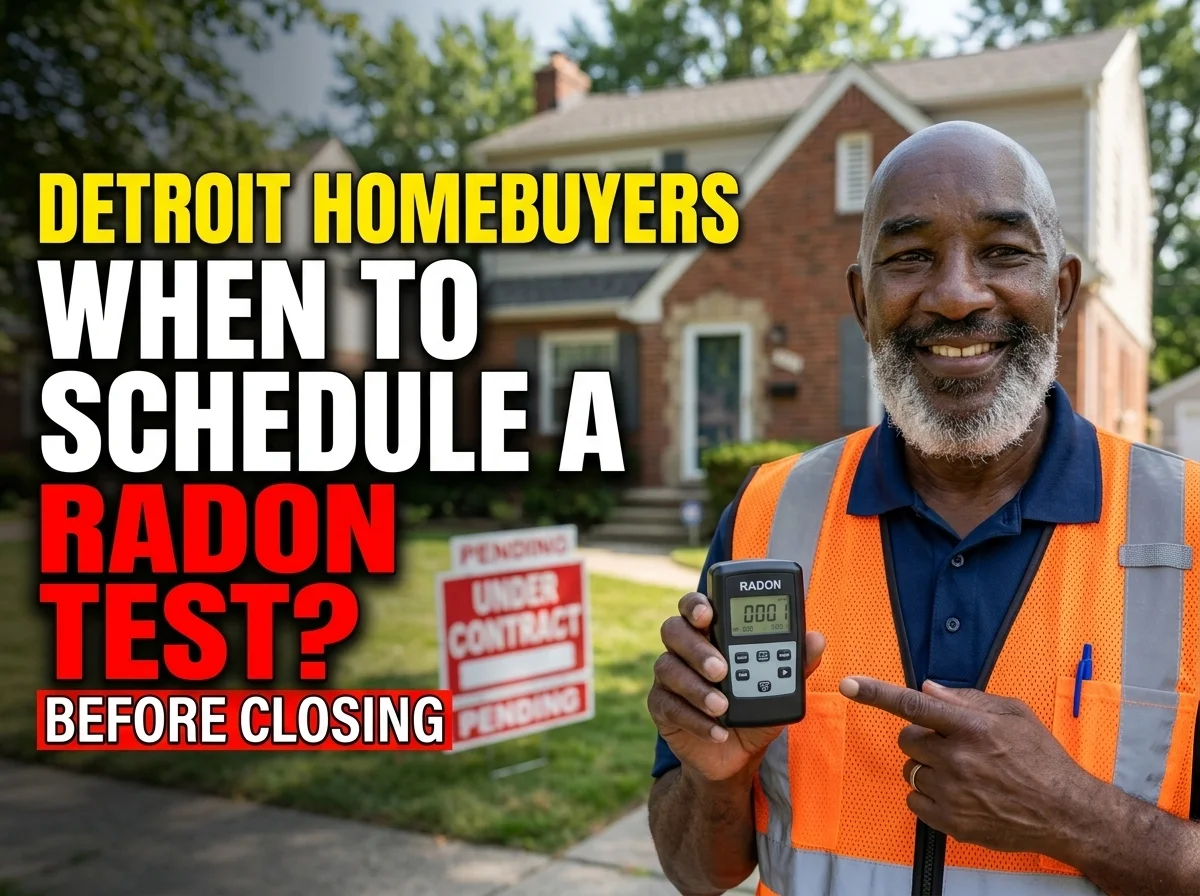
The best time to schedule a radon test before closing in Detroit is as soon as your offer is accepted, ideally during the same visit as your home inspection and early in your inspection period. Real estate testing takes at least 48 hours, the conditions have to be right before it starts, and a high result needs time for a follow-up test and a conversation with the seller. Waiting until the last few days of your window leaves little room for any of that.
This guide walks through why timing matters, what the schedule looks like from offer to closing, what can complicate a test, what to do if the result is high, and how testing fits into your home inspection.
Why Timing Matters in a Radon Test Before Closing
Most purchase agreements include an inspection contingency: a limited inspection period in which you can investigate the property and, depending on the terms, negotiate repairs or step back. How long it lasts is stated in your purchase agreement, so confirm the deadline with your real estate agent as soon as the offer is accepted.
Radon testing usually isn’t part of a standard inspection. It’s typically a separate service that has to be requested, which is why it’s easy to overlook until the clock is already running. The EPA recommends testing at the point of sale in every home, regardless of where it’s located, and Michigan’s numbers show why: roughly one in four Michigan homes tests above the action level, and in Wayne County about one in six does. Our radon testing guide for Detroit buyers and homeowners covers how the test itself works, and this article focuses on when to fit it in.
The Best Time to Schedule: Right After Your Offer Is Accepted
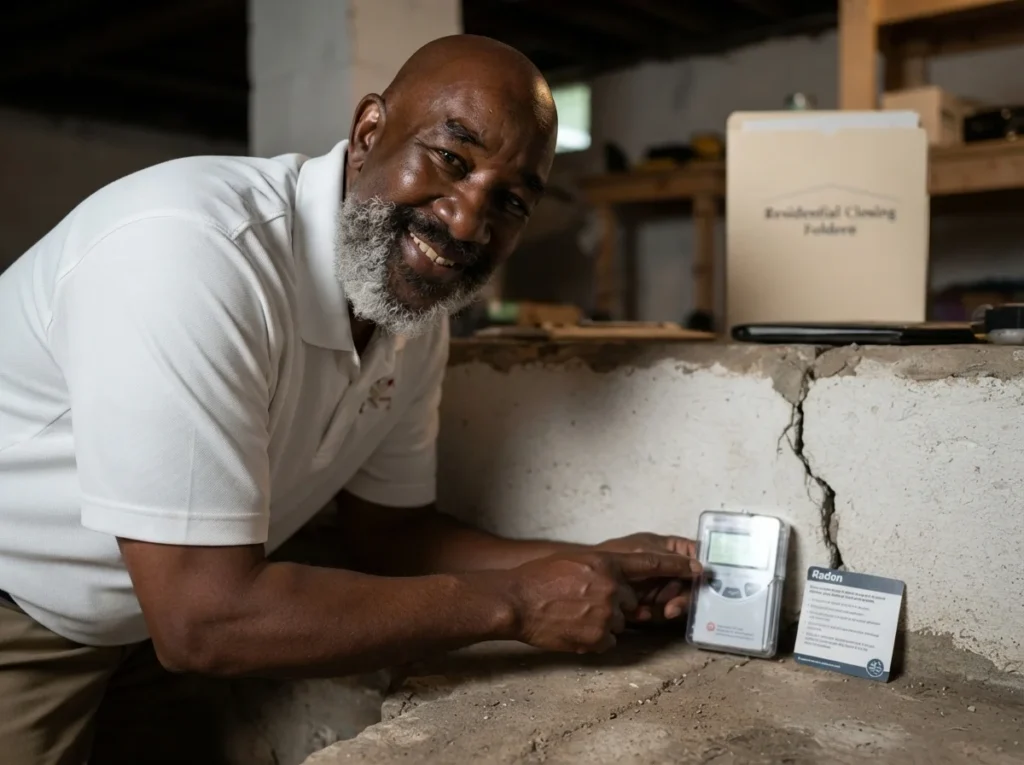
Scheduling early works in your favor for a simple reason: radon testing takes longer than most inspection items. Here’s what a typical sequence looks like:
- Offer accepted. Ask your agent for the exact inspection deadline.
- Book the test right away. Combine it with your home inspection if possible, and confirm the tester can fit the full testing period inside your window.
- Set up the conditions. Short-term tests require closed-house conditions, meaning windows and exterior doors kept shut except for normal entry and exit, starting at least 12 hours before the test and continuing until it ends.
- Run the test. Real estate testing generally runs at least 48 hours, with the device placed in the lowest livable level of the home.
- Review the results. A high reading may call for a follow-up test to confirm it.
- Decide and negotiate. If the result is at or above 4 pCi/L, this is when you talk with the seller about mitigation.
- Verify any fix, then close. If a system is installed, a test afterward confirms it’s working.
Notice how much of that happens after the test itself. A professional radon inspection booked on day one leaves room for steps 5 through 7. Booked on the last day of the window, it doesn’t.
What Can Delay or Complicate a Test
A radon test is simple, but it’s sensitive to conditions, and a few things commonly cause delays or unreliable readings:
- Open windows or running fans. If the house isn’t kept closed, the result can be invalid and the test may need to be restarted. This is a common issue in occupied homes, so make sure the seller knows the conditions in advance.
- Severe weather. The EPA advises against testing during severe storms or unusually high winds, which can distort results.
- Device interference. Moving or tampering with the device can invalidate the result, which is one reason many buyers prefer an independent professional for a purchase.
- An existing radon system. If the home already has a mitigation system, it should be running during the test, so you’re measuring how it performs.
- Timing of the season. Testing can happen any time of year, but cooler months make it easier to maintain closed-house conditions, and a follow-up test in the heating season is recommended if you tested in summer. Michigan’s winters make that straightforward.
Build a little slack into your schedule for any of these, especially if the window is short.
What If the Result Comes Back High?
A high result is common in Michigan and doesn’t have to derail a purchase. The EPA recommends that a buyer whose test is at or above 4 pCi/L negotiate with the seller to have a radon mitigation system installed to bring the level below 4.
In practice, the options include having the seller install a system before closing, a credit or price adjustment so you can handle it yourself, or arranging the work after you take possession. Whichever you choose, a few steps help:
- Confirm the result. A follow-up test is common before committing to a fix, since radon levels fluctuate.
- Get estimates from certified contractors. The EPA recommends hiring a mitigation contractor certified through a national program, and Michigan doesn’t regulate these companies at the state level, according to state radon program materials.
- Test after installation. A system should be followed by a test to confirm it worked.
- Ask about the clock. If mitigation or a retest won’t fit before your deadline, talk with your agent about whether the inspection period can be extended.
For a sense of the numbers involved, our guide to radon testing and mitigation costs in Detroit lays out what to expect.
Testing During Your Home Inspection
Combining the two is the most efficient route. A single visit means one schedule to manage, and it keeps radon testing inside your inspection window with everything else. Because the device needs steady conditions, the tester will explain what to do before and during the test, and the home inspection itself can be planned around that.
Sabreezz Home Inspection lists both home inspection and radon inspection among its services, so it’s worth asking about bundling when you book. As with any provider, it’s reasonable to ask about the testing method, certification, and when you’ll receive results.
Radon Testing in Different Buying Situations
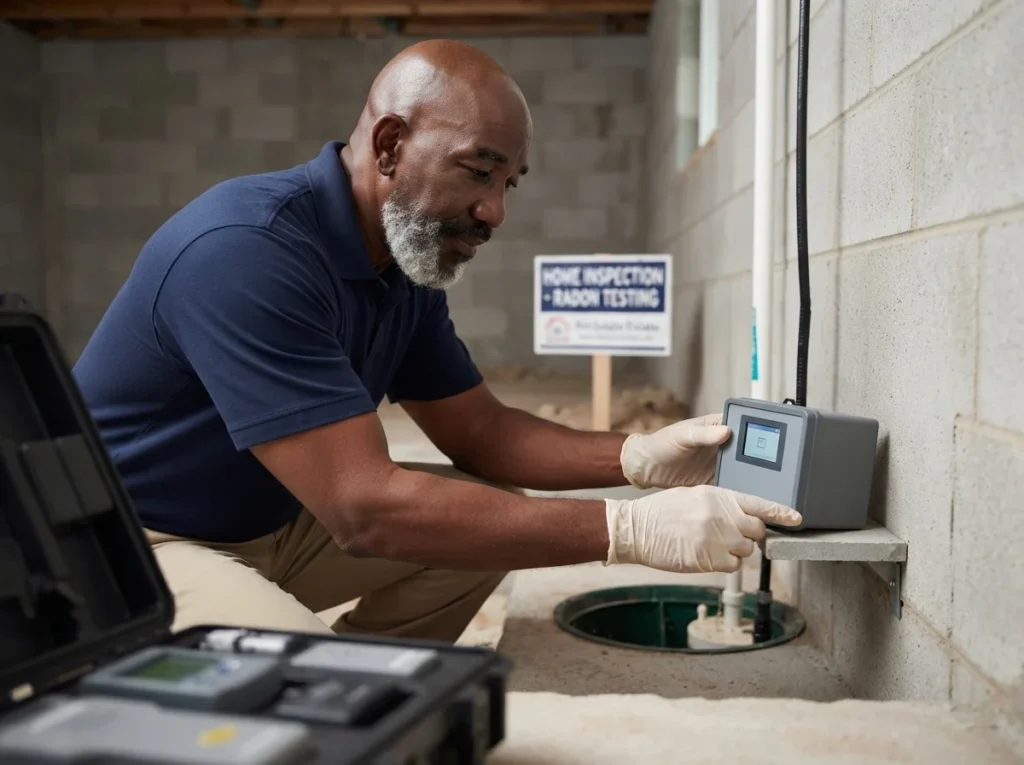
The basics stay the same, but a few situations call for a slightly different approach:
- Condos and multi-level homes. Test the lowest livable level, which may be a lower-floor unit or a finished basement.
- Newer construction. Radon-resistant features reduce levels but don’t eliminate the need for a test, so confirm with one.
- Homes with an existing system. Ask the seller for documentation, and make sure the system is running during the test.
- Vacant homes. Conditions are easier to control, but confirm that no one will be opening doors or windows during the test.
- Purchases without an inspection contingency. If you’ve waived inspections, you can still test after closing, but you lose the chance to negotiate a fix with the seller. Testing before you’re committed is the stronger position.
Frequently Asked Questions
Who orders the radon test in a home purchase?
Typically the buyer, as part of their due diligence, though who pays can be negotiated. Check with your real estate agent.
Can I rely on the seller’s radon results?
They’re useful to ask for, but an earlier test may be out of date or done under different conditions. An independent test during your inspection period gives you current information.
Should I retest after I move in?
If the purchase test was low, you’re in good shape, but it’s reasonable to retest after major changes like finishing a basement or altering the heating system.
How long until I get the results?
It depends on the method. Continuous monitors report after the test period ends, and mail-in kits take longer because of lab time. Ask the tester when to expect results so you can plan around your deadline.
Ready to Schedule Your Radon Test?
If you’re under contract on a home in the Detroit area, the sooner you book, the more time you’ll have to review the results. You can book your radon test alongside your inspection.