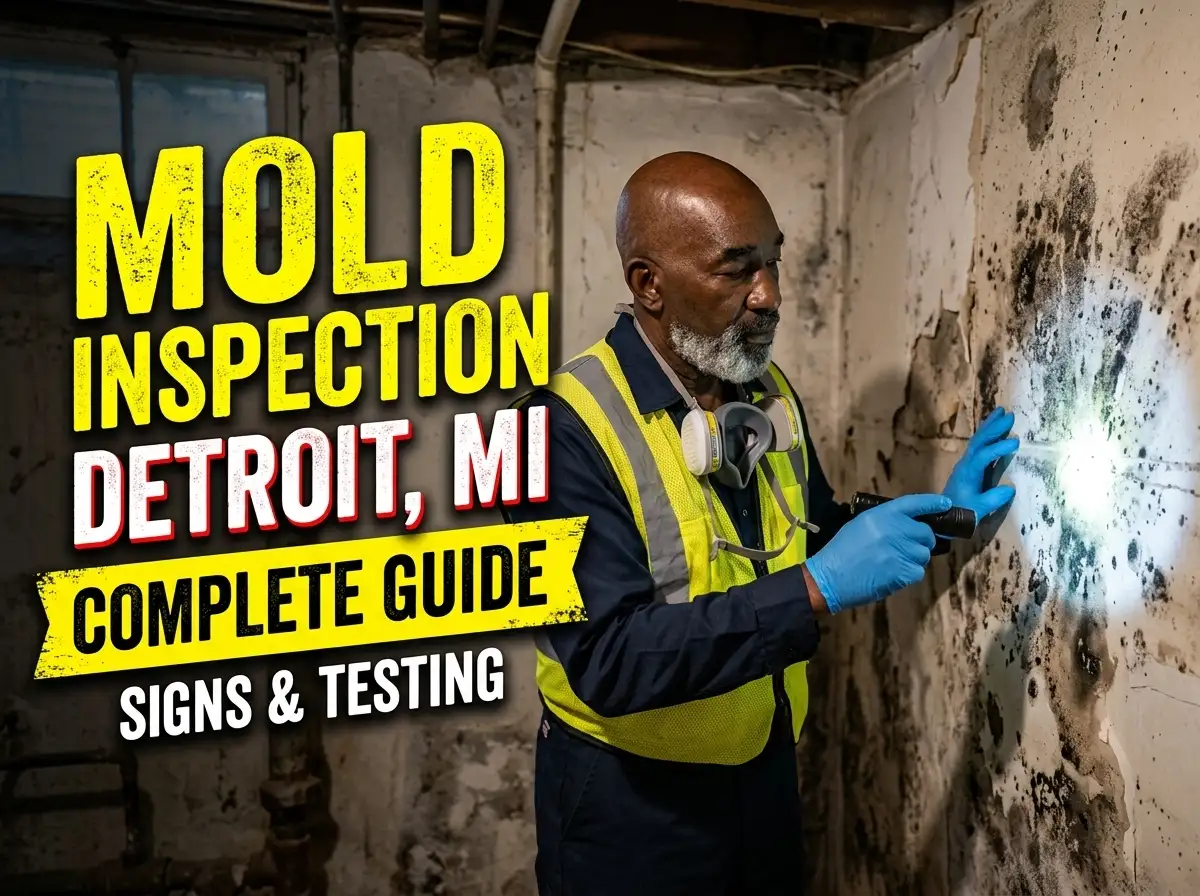
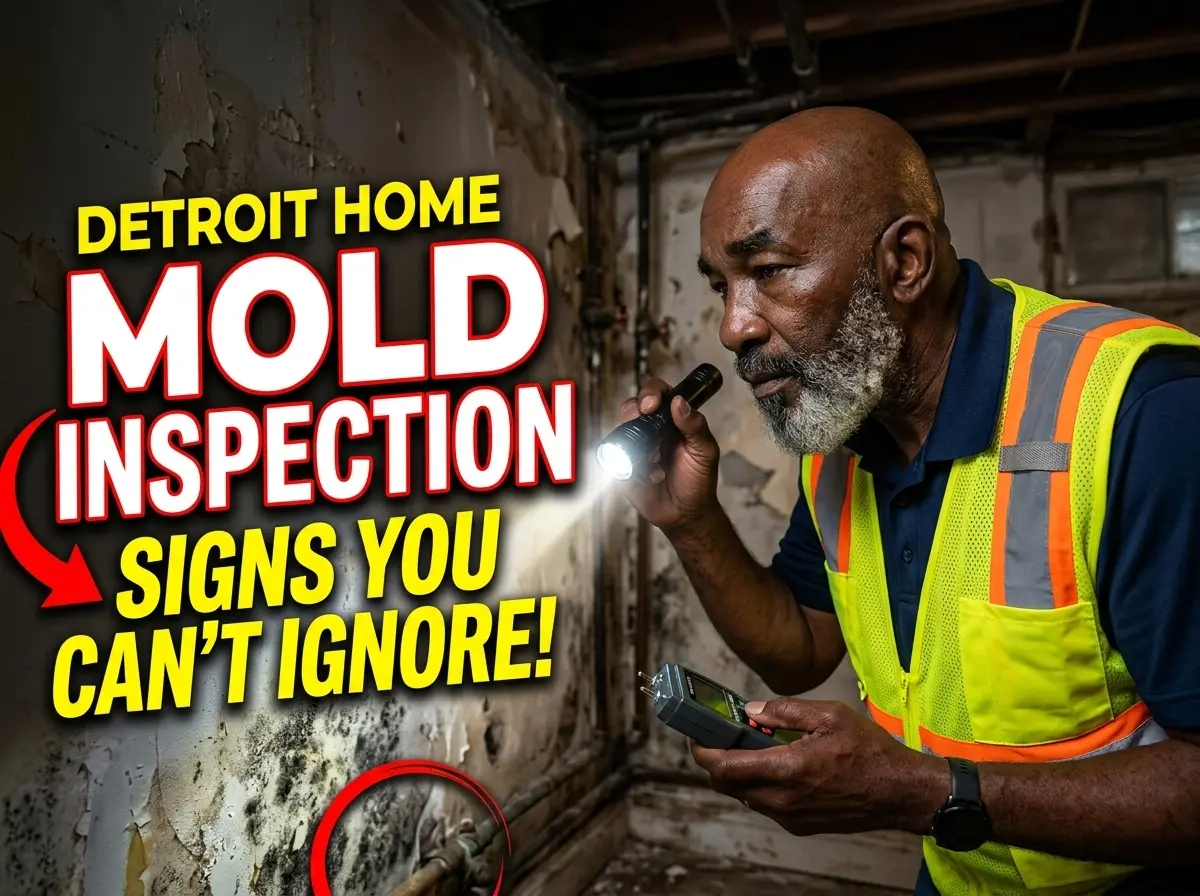
The clearest signs you need a mold inspection in Detroit are visible growth, a musty smell that won’t go away, recurring dampness or water stains, condensation, and a recent leak or flood that wasn’t dried out quickly. Mold follows moisture, so any one of these is a reason to look closer, even if you can’t see mold itself.
In Detroit, those signs are more common than many homeowners expect. Around nine in ten homes in the city were built before 1980, the city’s combined sewer system can send water back into basements during heavy rain, and the June 2021 flooding left thousands of households with basement water. This guide walks through the warning signs, where hidden mold tends to turn up, how health symptoms fit in, and when it’s time to call for an inspection.
Visible Mold Growth and Surface Changes
The most obvious sign is visible mold growth: spots or patches in black, green, white, or gray, sometimes fuzzy, powdery, or slimy. It tends to appear on walls, ceilings, around windows, in corners, and on materials like drywall, wood, and carpet.
Not every stain is mold, which is worth knowing before you panic. Dirt, soot, and mineral deposits can look similar. In basements, white, chalky residue on masonry is often efflorescence, a mineral deposit left behind when water moves through concrete or block. It isn’t mold, but it’s a sign that moisture is passing through the wall, which is the condition mold needs.
Other surface changes to watch for:
- Wall discoloration or stains that spread or return after cleaning
- Peeling or bubbling paint and wallpaper lifting away from the wall
- Warped or soft drywall and baseboards
- Ceiling stains, often in rings that show repeated wetting
If you can see mold, the EPA says sampling is usually unnecessary. What matters is the moisture behind it.
A Musty Odor, Even When You Can’t See Anything
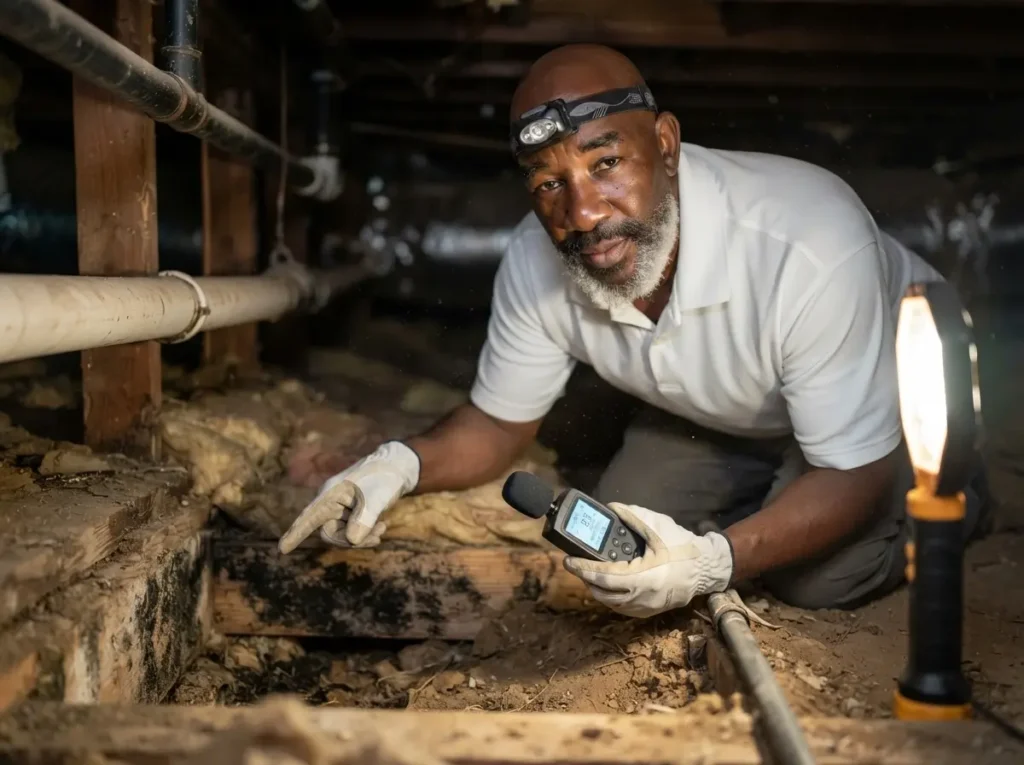
A musty odor is one of the most reliable clues to hidden moisture. That earthy, stale smell often means something is damp and growing, even though nothing visible is on display. The EPA notes that visible mold and moldy odors shouldn’t be present in a healthy indoor environment.
Pay attention to where and when you notice it:
- Strongest in the basement, closets, or a particular room
- Stronger after rain or in humid weather
- Coming from vents when the heating or air conditioning runs, which can point to HVAC odors from condensation or damp ductwork
- Lingering after cleaning, which suggests the source is behind a surface, not on it
A smell by itself doesn’t prove mold, but a persistent one deserves a look, since odors usually mean moisture has been present for a while.
Moisture Clues: Stains, Dampness, and Condensation
Because mold needs water, moisture signs are often the earliest warning. These are the ones to take seriously:
- Water stains on ceilings and walls, especially rings or streaks that grow over time
- Basement dampness, damp floors, or a damp smell after storms
- Recent leaks under sinks, around tubs and toilets, or from the roof or plumbing
- Condensation on windows, pipes, or cold walls, a sign of high indoor humidity
- Humidity problems that you can measure: the EPA recommends indoor humidity below 60 percent, ideally 30 to 50 percent
A sump pump that runs constantly, fails, or has no backup is another flag in a basement that has taken on water before. Our guide to common problems found during Detroit home inspections describes the basement and water issues inspectors see most often, many of which lead to mold if they’re not corrected.
After a Leak, Flood, or Sewer Backup
Timing is everything with mold after water damage. The EPA says drying water-damaged areas and materials within 24 to 48 hours usually prevents mold from growing. After that window, porous materials like drywall, insulation, carpet, and ceiling tiles that stayed wet are at risk, and growth can start inside walls where you can’t see it.
That’s a real concern locally. Flooding in Detroit isn’t limited to areas near water, and a University of Michigan–led study found mold in the basements of 84 percent of the sampled Detroit homes that had flooded before. If your home has had a leak, a backup, or a flood, or you’re buying one that has, consider an inspection even if everything looks fine on the surface. Sewage-related water is more serious than clean water, and cleanup after it is generally best left to professionals.
Where Hidden Mold Tends to Show Up
When mold is behind a surface, the signs point to where to look:
- Basements and crawl spaces: damp odors, stained walls, and floor drains with past backups
- Attics: stained roof decking, damp insulation, and condensation, especially in winter
- Wall cavities: discoloration or odor near plumbing, and bubbling paint on walls beneath leaks
- HVAC systems: musty air from vents, and moisture around coils and drip pans
- Bathrooms: a fan that doesn’t clear steam, and stains around tubs, sinks, and ceilings
- Exterior corners and window frames: cold spots where condensation collects
How inspectors trace moisture in these locations with a moisture meter, and when they use sampling, is explained in our mold inspection guide for Detroit homes.
Health Symptoms: A Clue, Not a Diagnosis
Some people notice symptoms before they notice mold. The CDC lists nasal stuffiness, eye irritation, wheezing, and skin irritation as commonly reported effects, and people with asthma or mold allergies may have stronger reactions. Infants, older adults, and people with weakened immune systems can be more sensitive.
A few points help keep this in perspective:
- Symptoms that ease when you’re away from home and return when you’re back are worth noting, though they don’t prove mold is the cause.
- The CDC doesn’t single out “black mold” as uniquely dangerous. Any indoor mold should be addressed, whatever its color.
- If you have symptoms, see a doctor. An inspection tells you about the home, and a physician tells you about your health.
When to Call for an Inspection, and When Cleanup Is Enough

A small, visible patch isn’t always a reason to bring in a professional. The EPA says homeowners can generally clean mold covering less than about 10 square feet, as long as the moisture source is found and fixed.
An inspection makes more sense when:
- There’s a persistent musty odor and you can’t find the source
- Moisture keeps coming back after repairs
- There’s been a flood, sewage backup, or long-wet materials
- You’re buying a home with moisture signs, staining, or an unclear water history
- Mold covers a large area, or may be in the HVAC system or inside walls
- Someone in the household has health concerns
A professional mold inspection looks for the moisture source, takes readings, and decides whether sampling would add anything. Testing isn’t always needed, and the EPA notes that visible mold usually doesn’t require it.
Frequently Asked Questions
Does a musty smell always mean mold?
Not always, but it usually means moisture is present, and mold may be growing where you can’t see it. A persistent smell is worth investigating.
Can mold grow behind walls without any signs?
Yes. Hidden growth can show up first as odor, staining, or peeling paint nearby. Moisture readings help find it without opening walls unnecessarily.
Is white powder on a basement wall mold?
Often it’s efflorescence, a mineral deposit, not mold. It still signals moisture moving through the wall and is worth addressing.
Who should I call first?
Start with someone who can assess moisture and identify its source, such as Sabreezz Home Inspection or another qualified company, then decide on testing or cleanup from there.
Ready to Find Out What’s Behind the Signs?
If you’ve noticed a musty smell, stains, or damp areas, or you’re buying a home with a questionable water history, an inspection can show what’s happening before it turns into a bigger problem. You can book your inspection and describe what you’ve seen.